

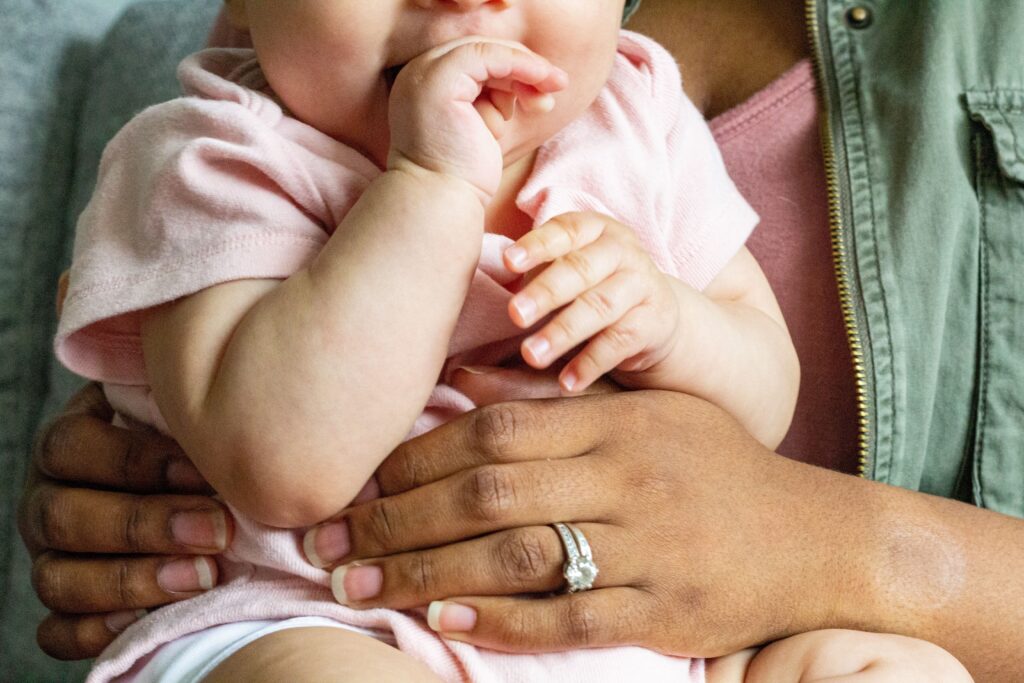
Somewhere between three and twelve months, your calm, drool-neutral baby turns into a tiny chewing machine with opinions about everything. Fingers, toys, the dog’s tail, your shoulder mid-hug — nothing is safe. Welcome to teething, the months-long process of twenty teeth slowly making their way up through the gums, one uncomfortable milestone at a time.
Here’s what’s actually happening, when to expect it, and — importantly — which “remedies” the FDA wants nowhere near your baby’s mouth.
The timeline (with a big asterisk)
Most babies get their first tooth somewhere between 4 and 7 months, though the normal range stretches from 3 months all the way to 12 — and some babies are simply born with a tooth already in. Genetics plays a real role here: early or late teethers tend to run in families.
The order matters more than the exact date. The typical sequence looks like this:
- 6–10 months: Lower central incisors (bottom front two) — almost always first
- 8–12 months: Upper central incisors (top front two)
- 9–16 months: Lateral incisors, filling out the front smile
- 13–19 months: First molars — bigger teeth, more pressure, more fussiness
- 16–23 months: Canines
- 23–33 months: Second molars, the last of the original 20
By around age 3, most kids have a full set of primary teeth. And if your baby’s teeth show up slightly out of this order, pediatric guidance is consistent that this isn’t a cause for concern on its own.
What teething actually feels like (for them, and you)
A large clinical study tracking children through tooth eruption found the most common symptoms were, in order: drooling, sleep disturbances, and irritability — each showing up in the large majority of kids studied. The same research found that canine teeth caused more loss of appetite than incisors or molars, which tracks with the general pattern that back teeth and canines tend to hurt more than the first front ones.
Translation into the symptoms you’ll actually see:
- Heavy drooling (stock up on bibs and burp cloths)
- Gnawing and chewing on hands, toys, furniture, you
- Gum swelling, sometimes with a visible white bump or line where the tooth is about to break through
- Fussiness and disrupted sleep, especially in the days right around eruption
- Mild ear-rubbing or cheek-rubbing on the side of the erupting tooth
- Slightly lower appetite, particularly with molars and canines
Research on the eruption process itself suggests the roughest window is short — roughly the four days before a tooth appears, the day it emerges, and a few days after — rather than a nonstop months-long ordeal, even though it can certainly feel that way in the moment.
What teething is not
This is the part worth bookmarking, because “teething” gets blamed for a lot it isn’t responsible for. According to pediatric guidance, teething does not cause high fever (100.4°F or higher), diarrhea, a body rash beyond the chin, or a persistent cough — and any of those symptoms deserve a call to your pediatrician rather than a “it’s just teeth” shrug. A little facial flushing or a very mild, brief temperature bump can happen, but true fever or GI symptoms point to something else going on at the same time, not the teeth themselves.
Safe ways to help — and the ones to skip entirely
The good stuff is refreshingly boring: a chilled (not frozen) silicone teether, a clean cold washcloth to gnaw on, or gently rubbing the gum with a clean finger. Age-appropriate acetaminophen can help on the roughest days, but check the dose with your pediatrician first.
Now the important part. The FDA has repeatedly and specifically warned against two very popular teething products:
Benzocaine gels (brand names include Baby Orajel and Anbesol). These can cause a rare but serious condition called methemoglobinemia, in which the blood’s ability to carry oxygen drops dangerously low — the FDA has tied it to reports including infant deaths, and has told manufacturers these products should not be marketed for teething in children under 2. Symptoms can show up within minutes or take up to two hours, which makes it especially hard for a parent to connect the dots at home.
Amber teething necklaces and bracelets. These have no proven benefit for teething pain, and the FDA has documented real cases of choking and strangulation from teething jewelry, including infant deaths. If you want something for your baby to wear, wear it yourself and let them chew on an actual teether instead.
When to actually call the pediatrician
Most teething is a “tough couple of days, then it’s over” situation. Reach out to your pediatrician if you see:
- A true fever of 100.4°F or higher
- Diarrhea, vomiting, or a rash that spreads beyond the chin
- A baby who seems genuinely unwell rather than just fussy — lethargic, not feeding, inconsolable
- No teeth at all by 18 months, which pediatric guidance flags as worth a dental check-in
The bright side
It’s loud, it’s drooly, and it will absolutely test your laundry rotation — but teething is temporary, well-studied, and mostly manageable with a cold washcloth and a little patience. And on the other side of it: that first gummy, one-tooth grin is worth every bit of it.
Sources:
- National Institutes of Health / PMC, “Signs and symptoms associated with primary tooth eruption: a clinical trial of nonpharmacological remedies,” ncbi.nlm.nih.gov
- U.S. Food and Drug Administration, safety communications on benzocaine and teething jewelry, via drugtopics.com, pharmacytimes.com, and prnewswire.com
- Healthline, “Baby Teeth Order,” healthline.com (citing American Academy of Pediatrics guidance)
- Nurturepedia, “Baby Teething: Signs, Timeline & Safe Remedies,” nurturepedia.com
This article is for general information and isn’t a substitute for medical advice — always check symptoms and remedies with your child’s pediatrician.